
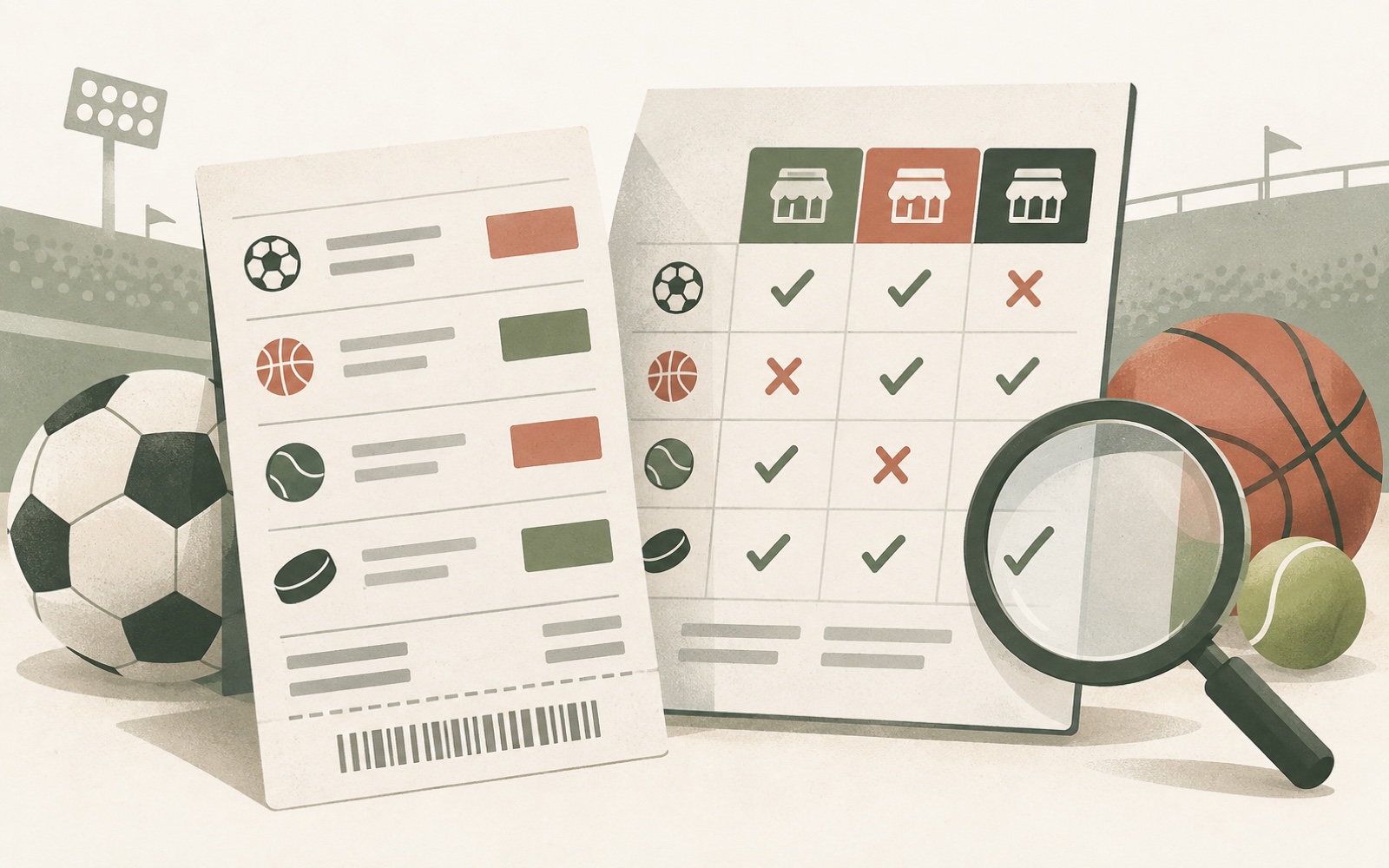
Choosing a betting site well is less about finding a winner and more about avoiding the sites that could cost you money or peace of mind. This guide sets out the checks in the order that protects you best.
None of it needs expertise. Work through the seven steps below, in order, and you will have judged a site on facts you can verify rather than on the marketing it puts in front of you.
01
Start with what you really want to bet on
Before you compare a single site, be honest about what you actually bet on and how often. Someone who backs a football accumulator on a Saturday needs different things from someone following horse racing every afternoon. Matching the site to your habit is the first step, because the best option for a daily racing punter can be mediocre for an occasional weekend bettor.
Write down, roughly, your monthly budget, the sports or events you follow and how you like to pay. That short list turns a vague search into a set of concrete questions, and it stops a clever welcome offer from doing your thinking for you.
02
Check the licence before you check anything else
The licence is the one test you should never skip, and it comes first because it decides whether you have any protection at all. Only firms licensed by the UK Gambling Commission may lawfully take bets from customers in Great Britain under the Gambling Act 2005.
Confirming the licence is free and takes under a minute on the Commission's public register, which is updated daily. If a site is not listed, stop there. Nothing else about it matters if it cannot legally hold your money.
A common example
A site advertises heavily on social media and looks polished, but a search of the register returns nothing under its name, trading name or web address. That absence is the answer. A slick design is easy to buy, a UK licence is not, and only one of them protects you.
03
Compare the safety controls side by side
Every licensed site must offer safer-gambling tools, but the ease of using them varies. Open the account settings, or the help pages, and see how quickly you can find a deposit limit, a time-out and a link to self-exclusion. Tools that are buried, or slow to take effect, tell you how the firm really thinks about its customers.
Since April 2025 there are also fixed protections in the background, including online slot stakes capped at £5, and £2 for those aged 18 to 24. A good site presents its controls plainly; a poor one makes limits easy to raise and hard to lower.
| What to compare | Why it matters to you | Where to find it |
|---|---|---|
| UKGC licence | Legal cover and a dispute route if things go wrong | Public register |
| Deposit limits and time-outs | Lets you cap spending before you start | Account settings |
| Withdrawal terms | Shows how fast and how easily you get paid | Banking or help page |
04
Look past the offer to the odds and markets
A welcome offer is a one-off; the odds are what you live with every week. Compare the plain price on a few events you would actually bet on, across two or three licensed sites, and you will quickly see which one is consistently more generous. That difference, small on any single bet, is what really adds up.
Check too that the markets you care about are covered in enough depth. A site can look competitive on the headline football result and thin everywhere else, so test it against your own habits rather than a reviewer's.
Key points
- Match the site to how you actually bet, then let the licence and safety tools decide, not the welcome offer.
- Compare the plain odds on real events; a 2.00 versus 1.90 price is £1 on every £10 staked.
- Confirm withdrawal terms before depositing, and see our payments guide for the detail.
05
Test how you pay in and cash out
Depositing is always easy; the real test is getting your money back. A trustworthy site states its withdrawal times clearly, accepts debit cards, e-wallets or open-banking transfers, and never a credit card, which has been banned for gambling since April 2020. Read the banking page before you deposit, not after you win.
Look for a firm that verifies your identity early, when you open the account, rather than springing checks on you the moment you try to withdraw. Late verification is one of the most common ways a poor site delays a payout.
A common example
You deposit £20, win, and ask to withdraw. A good site returns debit-card funds within one to three working days after any checks. A poor one suddenly asks for documents it could have requested at sign-up, then holds the money while it reviews them. Same win, very different experience.
06
Read the small print on bonuses
Bonuses are marketing, so read them as sceptically as any other advert. Since 19 January 2026 wagering requirements are capped at 10 times the bonus, and promotions can no longer mix sportsbook and casino to push you across products. If an offer seems to ignore these limits, that is a sign the site is behind the rules.
Work out what you would have to stake to release any winnings, and whether that is remotely realistic for your budget. An offer you cannot practically clear is not a benefit, it is a hook.
07
A plain checklist before you commit anywhere
Bring it together into one short checklist. Is the licence verified on the register. Are deposit limits, time-outs and self-exclusion easy to set. Are the odds competitive on events you follow. Are withdrawals paid by debit card or e-wallet with clear timings. Are the bonus terms honest and within the 2026 caps.
If every answer is yes, you have chosen carefully and can bet within a budget you set in advance. If any answer is no, keep looking. Ten minutes of checking now saves a great deal of frustration later.
Related reading on this site
- Licence check
- Odds and markets
- Payments and withdrawals
- Safer gambling and GAMSTOP
- Warning signs to avoid
How we check our facts
Every figure on this page is taken from official UK sources and dated to September 2026, drawing on Gambling Commission guidance and the Gambling Act 2005 as amended. We hold no operator advertising, name no brands and last reviewed this page on 25 September 2026.

Frequently asked questions
How long should it take to choose a betting site properly
About ten minutes for the checks that matter. Verifying the licence on the public register takes under a minute, finding the deposit-limit and self-exclusion tools a few minutes more, and comparing odds on two or three events the rest. Doing it once, carefully, beats switching sites on the strength of every new offer.
Should I open accounts with several sites to compare odds
Some people do, because prices differ and comparing them is where value lives. If you do, apply the same licence and safety checks to each, and set a deposit limit on every account so spreading your accounts does not quietly spread your spending. One firm, chosen well, is perfectly sensible too.
Does a bigger welcome offer mean a better site
No. A large offer usually comes with heavier conditions, and it says nothing about the licence, the odds you will get week to week or how fast you are paid. Since January 2026 wagering requirements are capped at 10x the bonus, so read the terms and judge the site on the things that last, not the headline number.
What is the single most important thing to check first
The UK Gambling Commission licence. Without it you have no legal protection and no dispute route, and no bonus or feature can make up for that. Search the site on the Commission's public register before you look at anything else, and walk away if it is not listed.